
Introduction
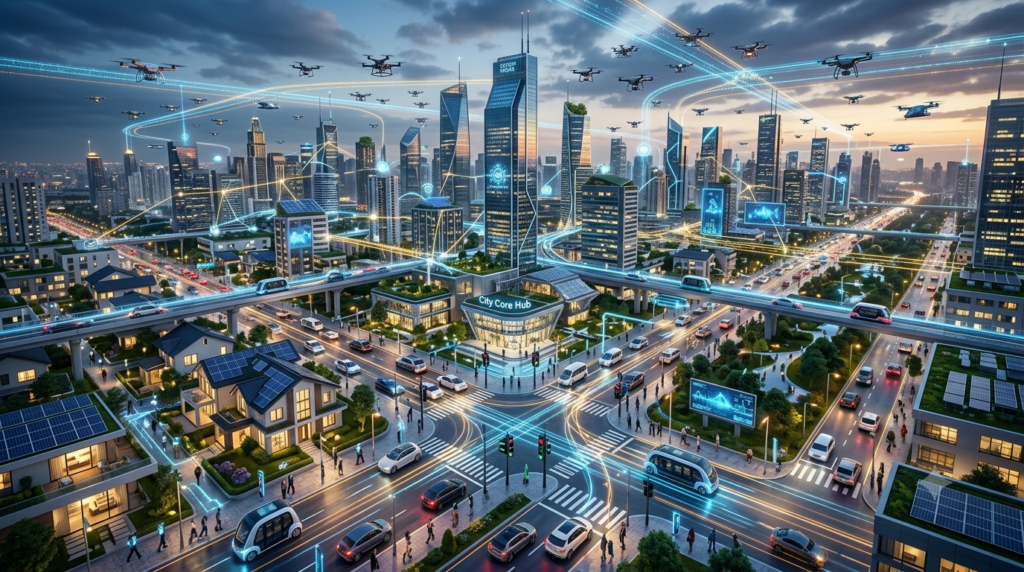
Nowadays, there are millions of devices connected to the internet, from smart security cameras, fitness bands, smartwatches, and even smart cars. These devices are becoming smarter every year. They do not require constant human intervention. They automatically collect data, communicate with each other, and perform tasks with higher efficiency while minimizing errors.
This growing network of connected devices is known as the Internet of Things (IoT). Although many of us don’t realize it, many of the tasks that we perform in our daily lives are supported by the Internet of Things. It works behind the scenes to make our lives more convenient and efficient.
The Internet of Things is helping transform industries like healthcare, transportation, agriculture, smart homes, and education. The main reason businesses are adopting the Internet of Things is to improve productivity, reduce costs, and make better decisions with the help of real-time data analysis.
In this article, we are going to explore what the Internet of Things is, how it works, its major components, benefits, real-world applications, challenges, and why experts believe it will play an important role in the future.
What Is the Internet of Things (IoT)?
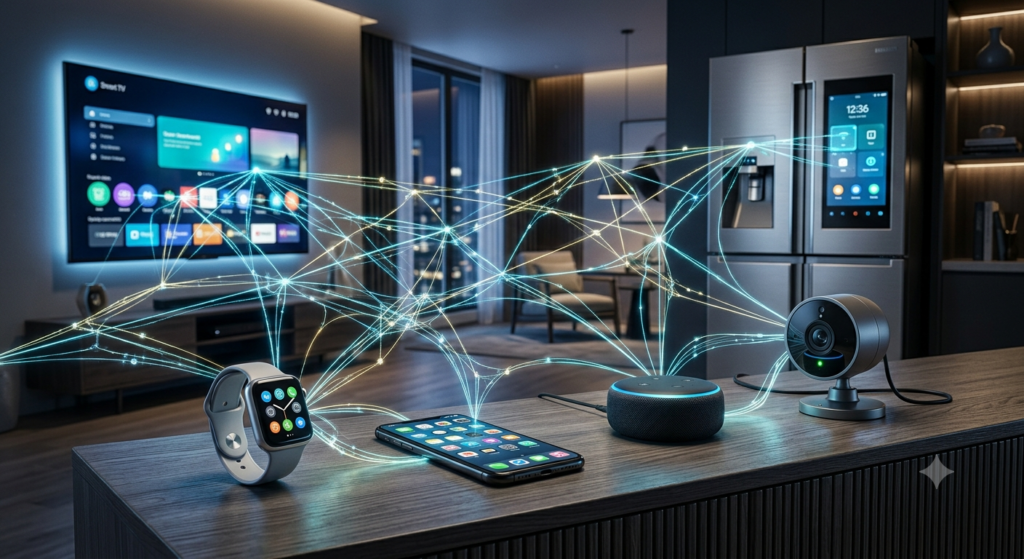
The Internet of Things (IoT) refers to physical devices that are connected to the internet and can collect data in real time, communicate with each other, and perform tasks automatically without human intervention.
All these devices contain components such as sensors, processors, and internet connectivity that help them communicate with other connected devices and make tasks more convenient for humans.
Instead of performing only one task, IoT devices process the data collected from their surroundings and automatically make decisions based on predefined instructions.
Some common examples of IoT devices include:
- Smart speakers
- Smart lights
- Smart thermostats
- Fitness trackers
- Smartwatches
- Security cameras
- Smart TVs
- Connected cars
- Smart refrigerators
- Industrial sensors
Nowadays, the Internet of Things is not limited to households. It is also widely used in industries like healthcare, hospitals, manufacturing factories, offices, transportation, and smart cities.
Why Is IoT Becoming So Popular?
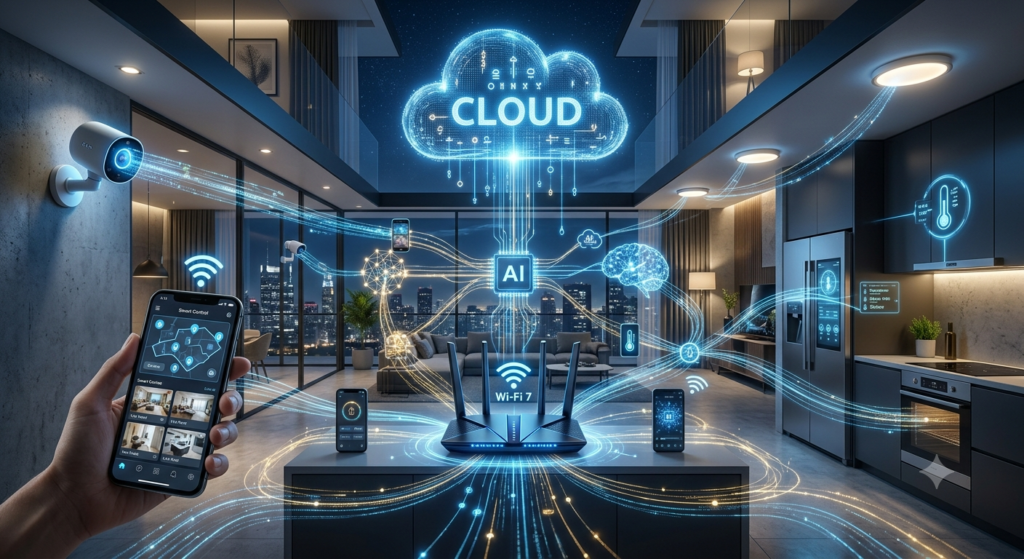
The number of devices connected to the internet is increasing every year. According to industry experts, tens of billions of devices are expected to be connected to the internet in the coming years.
Some major reasons behind the growth of the Internet of Things include:
- Faster internet connections
- More affordable smart devices
- Cloud computing
- Artificial Intelligence (AI)
- Improvements in technologies like Wi-Fi 6 and Wi-Fi 7
All these technologies work together to make devices faster, smarter, and more efficient. As technology continues to improve, the Internet of Things is expected to become an essential part of our daily lives.
How Does the Internet of Things Work?
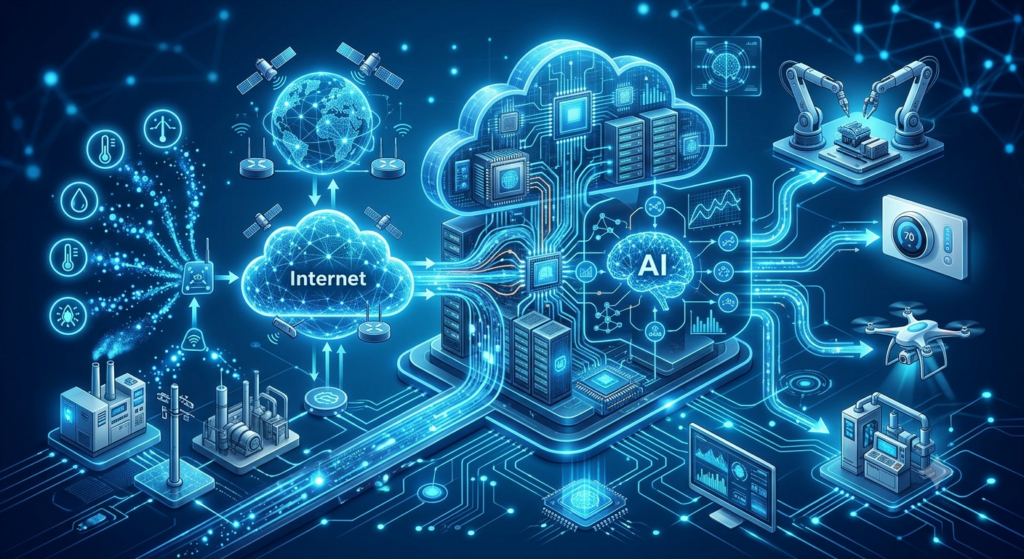
Although the Internet of Things may sound complex, it is actually very easy to understand. Every IoT device follows a series of steps that allow it to collect information from its surroundings, process it, and exchange information with other connected devices.
Step 1: Data Collection
IoT devices use sensors to collect information from their surroundings.
For example:
- A smart thermostat measures room temperature.
- A fitness band tracks your heart rate.
- Security cameras detect motion.
- Smart parking sensors detect whether a parking space is occupied.
Step 2: Data Transmission
Once the data is collected, it is sent through the internet using technologies such as:
- Wi-Fi
- Bluetooth
- 5G
- Ethernet
- Cellular networks
The collected information is then transferred to the cloud or nearby devices for processing.
Step 3: Data Processing
After receiving the data, cloud servers or edge computing systems analyze the information to identify patterns, predict outcomes, and automate decisions. Artificial Intelligence (AI) may also be used during this process to make the system even smarter.
Step 4: Action
Based on the processed information, the system automatically performs an action.
For example:
- When someone enters a room, smart lights automatically turn on.
- A smartwatch automatically sends health alerts in case of any medical issue.
- Smart irrigation systems automatically water crops when soil moisture becomes low.
- A smart security camera sends an emergency notification to your phone whenever it detects suspicious activity.
Main Components of an IoT System
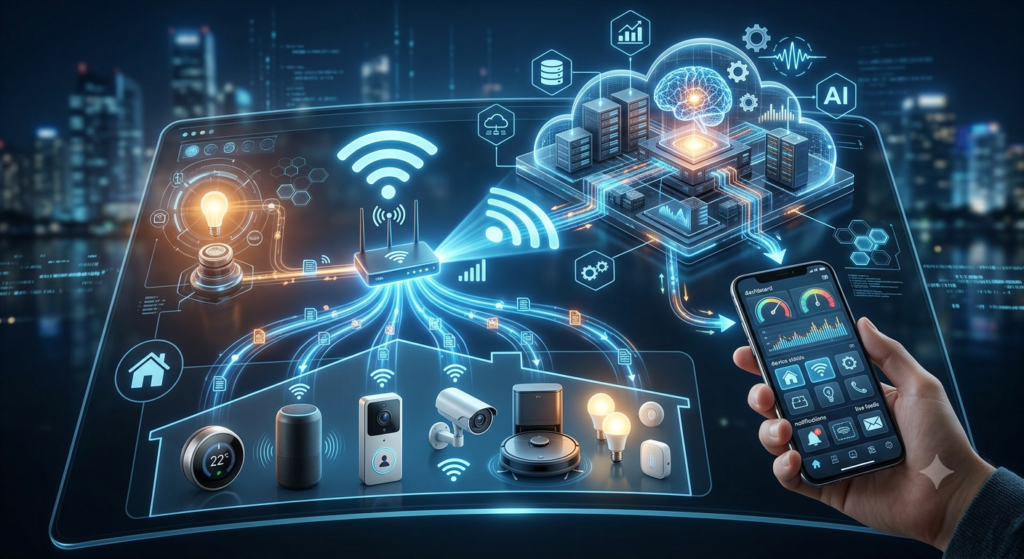
Every Internet of Things system consists of several components that work together to make our tasks easier and more convenient.
1. Smart Devices
Smart devices collect information from their surroundings.
Examples include:
- Smart sensors
- Cameras
- Wearable devices
- Smart appliances
- Connected vehicles
2. Internet Connectivity
The collected information is transmitted using communication technologies such as:
- Bluetooth
- Cellular networks
- 5G
- Ethernet
- Wi-Fi
3. Cloud Computing
Cloud computing stores the information collected by IoT devices. It also allows users to access their data from anywhere in the world using the internet.
Major Benefits of the Internet of Things (IoT)
The Internet of Things has significantly changed the way businesses and individuals use technology by connecting devices to the internet. It helps improve efficiency, automation, and convenience in many areas of daily life.
Some of its major benefits include:
1. Improved Automation
One of the biggest advantages of the Internet of Things is automation. Connected devices can perform various tasks automatically without human intervention.
For example:
- Smart lights automatically turn on when someone enters a room.
- Smart thermostats adjust the room temperature based on your preferences.
2. Better Energy Efficiency
Many IoT devices are designed to reduce energy consumption.
For example:
- Lights automatically turn off when nobody is in the room.
- Smart plugs monitor electricity usage throughout the day.
This helps reduce electricity bills while also protecting the environment.
3. Real-Time Monitoring
IoT devices continuously collect and process information in real time.
Examples include:
- Health-monitoring smartwatches
- Home security cameras
Users also receive instant notifications whenever unusual activity is detected.
4. Better Convenience
This is one of the biggest reasons behind the popularity of IoT devices.
Nowadays, people can control many devices directly from their smartphones, including:
- Lights
- Door locks
- Security cameras
- Home appliances
- Smart TVs
5. Improved Decision Making
IoT devices generate a huge amount of real-time data.
Businesses use this information to:
- Improve customer experience
- Increase productivity
- Reduce operational costs
- Predict equipment failures
Real-World Applications of IoT
Internet of Things devices are not only used in homes but also across many industries.
1. Smart Homes
Smart homes are one of the best examples of IoT.
Devices communicate with each other to improve comfort, security, and energy efficiency.
Examples include:
- Smart speakers
- Smart lights
- Smart door locks
- Smart security cameras
- Robot vacuum cleaners
These devices can be controlled using smartphones or voice assistants.
2. Healthcare
Healthcare is one of the industries that benefits the most from IoT.
Doctors can monitor patients using wearable devices.
Examples include:
- Heart-rate monitoring
- Blood-pressure monitoring
- Smart hospital equipment
These technologies help doctors respond faster and provide better patient care.
3. Manufacturing
Factories are becoming smarter through IoT.
Examples include:
- Predictive maintenance
- Industrial robotics
- Self-monitoring equipment
This improves production efficiency while reducing downtime.
4. Transportation
IoT is transforming transportation through technologies such as:
- Connected vehicles
- Smart traffic lights
- Navigation systems
These technologies help reduce traffic congestion and improve road safety.
5. Agriculture
Traditional farming is gradually being replaced by smart farming using IoT.
Smart sensors help farmers monitor:
- Soil moisture
- Crop health
- Water usage
- Weather conditions
This improves crop production while reducing water wastage.
Frequently Asked Questions (FAQ)
What is the Internet of Things (IoT)?
The Internet of Things (IoT) refers to physical devices connected to the internet that collect data, communicate with each other, and perform tasks automatically without human intervention.
What are examples of IoT devices?
Some examples include:
- Smart speakers
- Smartwatches
- Smart TVs
- Smart security cameras
- Fitness trackers
- Smart thermostats
- Connected vehicles
Is IoT secure?
IoT devices are generally secure when users regularly update their software, use strong passwords, enable two-factor authentication whenever possible, and purchase devices from trusted manufacturers.
Final Thoughts
The Internet of Things is significantly transforming the way people live and work. By connecting everyday devices to the internet, IoT is making homes, industries, healthcare, transportation, and agriculture smarter, more efficient, and more convenient. As technology continues to evolve, the Internet of Things is expected to become an even bigger part of our daily lives.
🔗 Article Suggestions
If you’re interested in future technologies, read our article Top 10 Technologies That Will Change the World by 2030.
To learn how connected devices process data faster, explore What Is Edge Computing? Benefits, Uses & Future Applications.
If you’d like to understand how online data is stored and managed, check out What Is Cloud Computing? Types, Benefits & Real-World Uses.
To learn about the latest wireless networking technology powering smart devices, read What Is Wi-Fi 7? Features, Speed, Benefits & Everything You Need to Know.
If you’re interested in protecting connected devices from online threats, don’t miss Essential Cybersecurity Tips Everyone Should Follow in 2026.
If you’d like to understand how blockchain can improve security for connected systems, explore What Is Blockchain Technology? Benefits, Types & How It Works.