Introduction
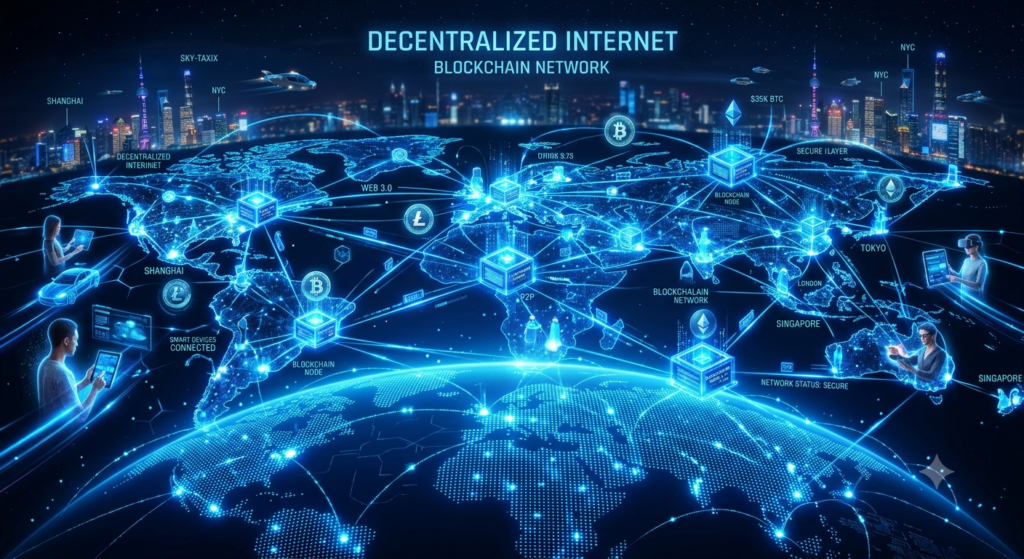
Nowadays, the Internet has become a very important part of our daily lives. No matter whether you are shopping for products online, watching movies, making digital payments, working, or doing almost any daily activity, everything depends on the Internet.
The Internet has significantly evolved over the past few decades. We have moved from simple-looking websites to websites that are interactive with users, where people can communicate, create content, and do business online. Today, many professional experts are forecasting that another major evolution of the Internet is beginning, known as Web3.
This Web3 Internet will not be like today’s Internet, which is mainly controlled by large technology companies. Web3 has a very clear objective, and that is to provide a decentralized Internet where users have greater control over their own data and digital assets. Although Web3 is still under development, many industries see great potential in this technology. Technologies like blockchain, smart contracts, artificial intelligence, decentralized applications, and cryptocurrencies will play a huge role in making Web3 a reality.
In this article, we are going to learn what Web3 is, how it works, its major features, benefits, challenges, and why experts believe it will become the next generation of the Internet.
What Is Web3?
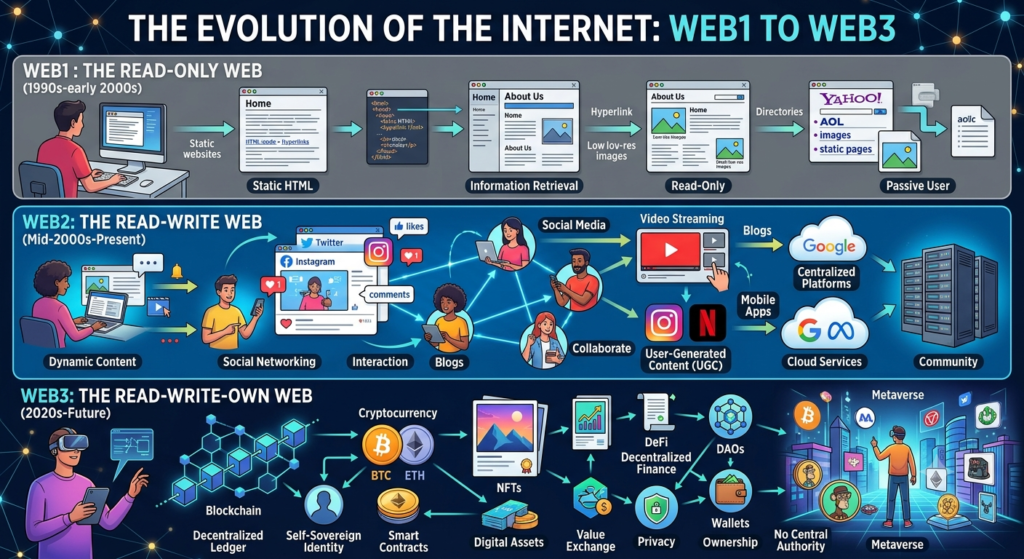
Web3 refers to the next generation of the Internet, which has the objective of providing users with more ownership and control over their digital data, digital identity, and online activities.
It will not be like today’s Internet, where many online services are controlled by centralized companies. Instead, Web3 uses blockchain technology, which helps distribute information across various computers connected through a network.
This decentralized approach helps reduce dependence on a single organization and allows users to interact directly with applications without heavily relying on intermediaries.
Technologies that build the Web3 ecosystem include:
- Blockchain
- Smart Contracts
- Decentralized Applications (DApps)
- Digital Wallets
- Decentralized Finance (DeFi)
The main objective of Web3 is to develop a more transparent and secure Internet that is controlled by users, where individuals own their digital assets instead of depending entirely on centralized platforms.
How Does Web3 Work?
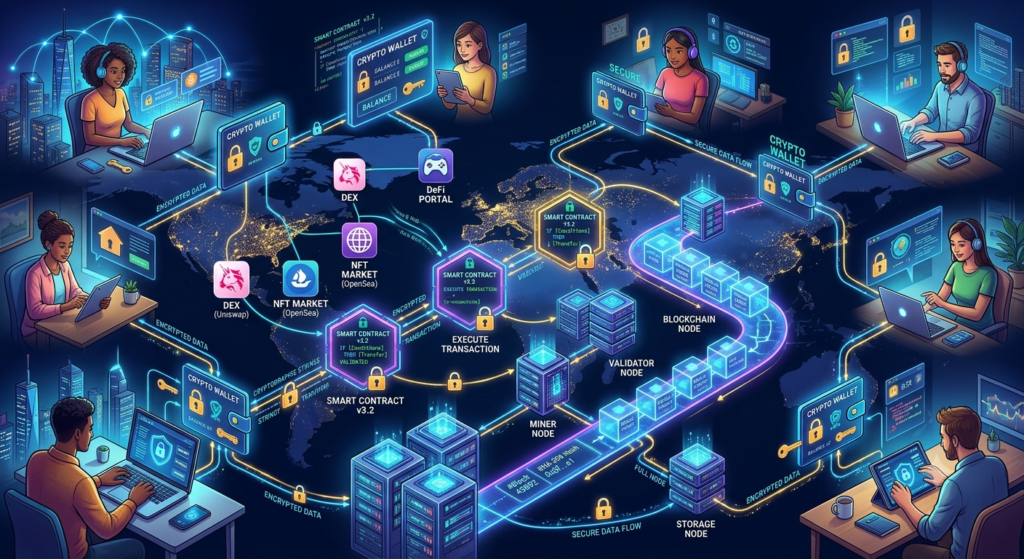
Web3 is a combination of several modern technologies that help create a decentralized digital ecosystem. Let’s understand the process step by step.
Step 1: User Connects with a Digital Wallet
With Web3, users connect to applications using a digital wallet instead of creating an account with a username and password. This wallet acts as the user’s digital identity while also securing their digital assets.
Step 2: Blockchain Records the Transaction
Whenever a user performs an action such as making a payment, purchasing a digital asset, or completing a transaction, it is securely recorded on the blockchain. Since blockchain records are distributed across multiple computers, the information becomes highly secure and very difficult to modify.
Step 3: Smart Contracts Execute Automatically
Most Web3 applications use smart contracts. A smart contract is a digital agreement that automatically executes itself whenever predetermined conditions are met.
Step 4: Data Is Shared Across the Network
Web3 does not store information on a single centralized server. Instead, it distributes data across multiple computers in a network. This improves reliability while reducing the chances of system failure.
Step 5: Users Control Their Digital Assets
One of the biggest differences between Web2 and Web3 is ownership. In Web3, users have greater control over their digital identity, personal information, cryptocurrencies, NFTs, and other digital assets.
This gives users more freedom over their online activities.
Key Features of Web3
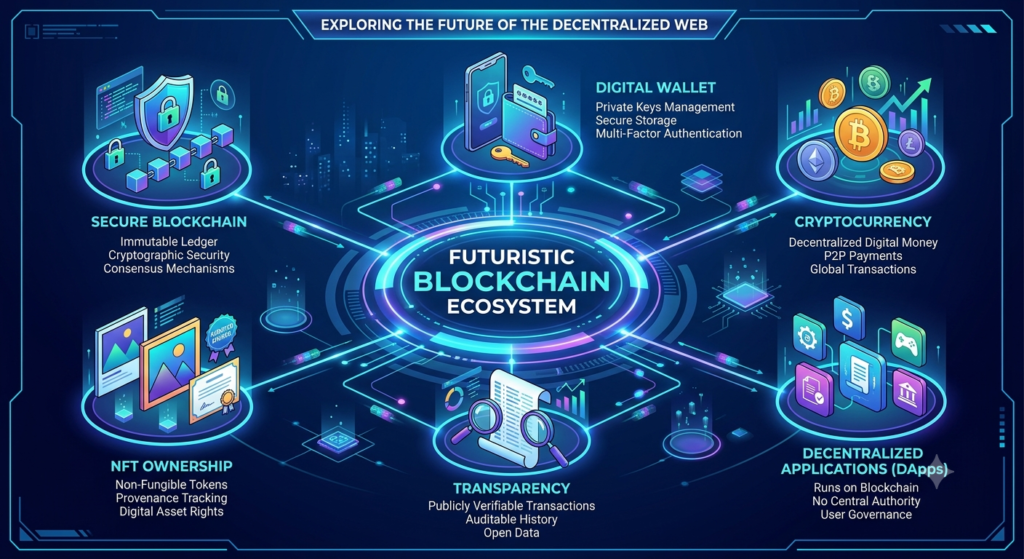
Web3 introduces several unique features that make it very different from today’s Internet.
Decentralization
Web3 does not rely on a single authority or centralized organization. It distributes information across blockchain networks, reducing dependence on one organization while improving transparency.
User Ownership
Users have greater ownership of their personal data, digital identity, and online assets.
Blockchain Security
Thanks to blockchain technology, transactions are recorded across multiple computers, making the information highly secure and difficult to modify without authorization.
Smart Contracts
Smart contracts automatically execute agreements without intermediaries. This improves efficiency while reducing operational costs.
Greater Transparency
Since blockchain records can be verified, users can easily confirm whether a transaction is legitimate. This builds trust within the system.
Web3 vs Web2
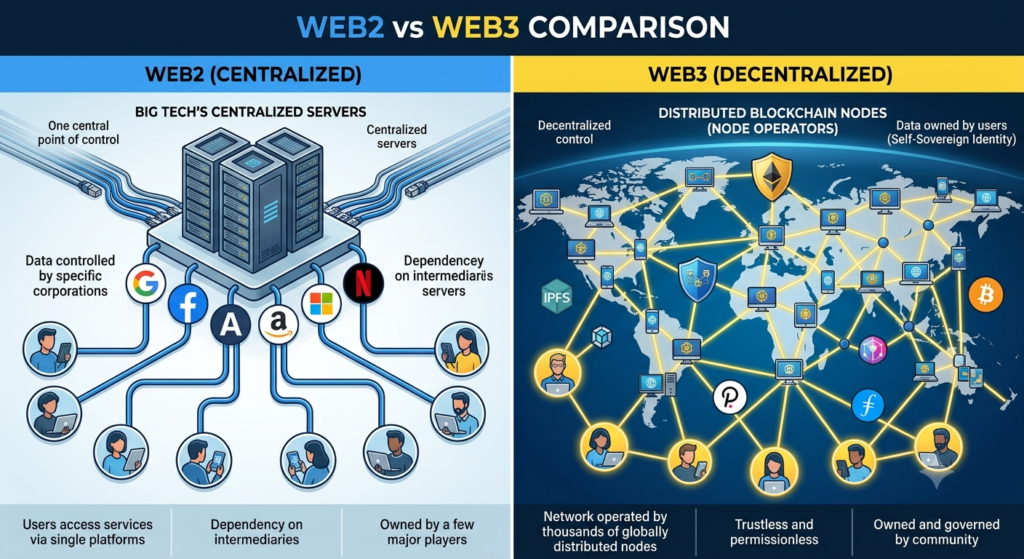
Many people think Web3 is simply a faster version of today’s Internet, but that is not the case. The biggest difference between Web2 and Web3 is how data is stored, managed, and controlled.
In Web2, most online services are controlled and managed by centralized companies. Social media platforms, online marketplaces, and cloud services store user data on their own servers. Although users can easily access these services, they have limited control over their own data.
On the other hand, Web3 distributes data across multiple computers instead of storing everything on a centralized server. This gives users greater control over their digital identity, digital assets, and personal information.
Although Web3 is still under development, experts believe that Web2 and Web3 will work together for several years before Web3 becomes more widely adopted.
Real-World Applications of Web3
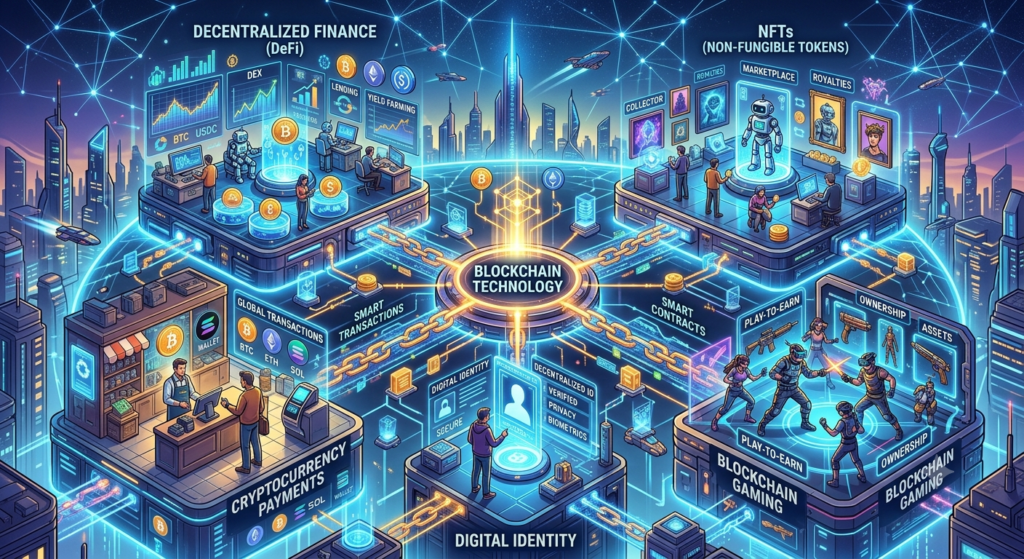
Although we know that Web3 is available today, it is still under the development phase. Many industries in the technology field and other sectors are starting to explore its huge future potential because it can help improve their overall business operations.
Decentralized Finance (DeFi)
Web3 helps provide financial services such as lending, borrowing, and payments without relying completely on traditional banks. Users can easily access these services online through smart devices.
Digital Payments
With the help of Web3, users can transfer cryptocurrency funds across the world in a short duration of time using blockchain technology.
NFTs (Non-Fungible Tokens)
Artists, creators, and businesses use NFTs to sell digital artwork, collectibles, music, and gaming items with verified ownership.
Blockchain Gaming
Using blockchain technology, many modern games now allow players to own, trade, and sell in-game assets securely.
Digital Identity
Web3 helps users secure their digital identity while reducing their dependency on platforms that follow centralized systems.
Challenges and Risks of Web3
Although we know that Web3 has a very bright future and can help many industries improve their operations, there are still several challenges that need to be solved before it becomes widely adopted.
Scalability
Most blockchain networks still process transactions more slowly than traditional centralized systems.
Security Risks
Although blockchain technology is highly secure, users can still lose funds because of scams or insecure digital wallets.
Regulatory Uncertainty
Many governments around the world are still developing laws and regulations regarding blockchain technology, cryptocurrencies, and decentralized platforms.
User Experience
Some Web3 applications are still complicated and are not very convenient for beginners to understand and use.
High Energy Consumption
Some blockchain networks require a significant amount of computing power. However, many newer blockchain technologies are becoming much more energy-efficient than before.
The Future of Web3
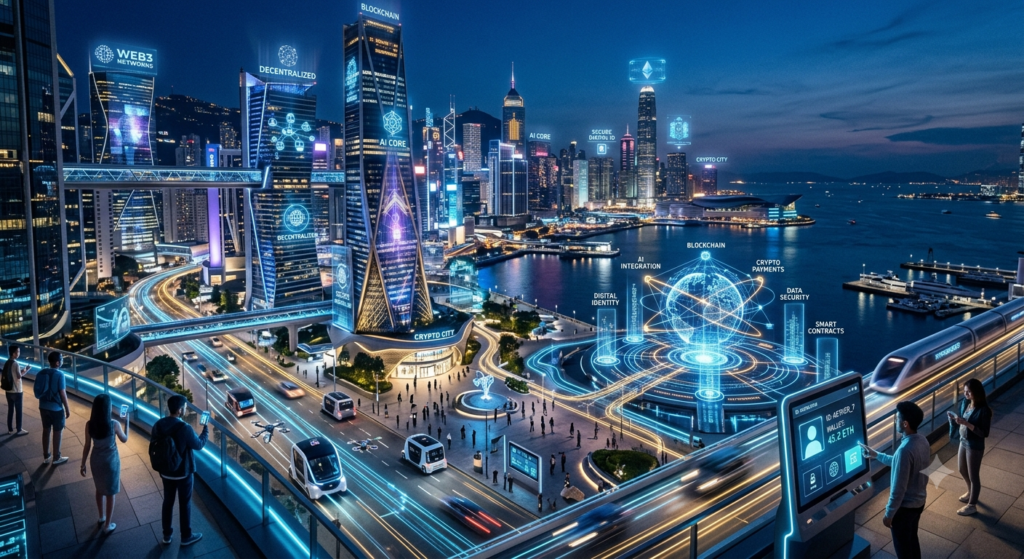
Professional experts believe that Web3 is going to reshape the future of the internet. As technologies like Artificial Intelligence, Blockchain, Cloud Computing, 5G, and Digital Identity continue to improve, Web3 systems are expected to become more scalable, secure, and easier for users to access.
In the upcoming years, Web3 may become an important part of industries such as banking, healthcare, education, supply chain management, digital payments, social media, and government services.
Although its adoption may still take several years, experts believe Web3 will become a major part of the future digital economy.
Frequently Asked Questions (FAQ)
What is Web3?
Web3 refers to the next generation of the internet that aims to provide users with more ownership and control over their digital data, digital identity, and online activities.
Unlike today’s internet, where many online services are controlled by centralized companies, Web3 uses blockchain technology to distribute information across multiple computers connected to a network.
Is Web3 the same as Blockchain?
No. Both are different.
Blockchain is one of the core technologies that powers Web3, but Web3 also includes technologies such as Smart Contracts, Decentralized Applications (dApps), Digital Wallets, and Cryptocurrencies.
Is Web3 replacing today’s internet?
No, that’s completely wrong.
Experts believe that Web3 will work alongside Web2 instead of completely replacing it.
Final Thoughts
In my perspective, Web3 is one of the biggest evolutions of future technology that will help shape the digital world. It provides users with greater control over their digital identity, personal data, and online assets.
Unlike today’s traditional Web2 internet, Web3 focuses on decentralization, transparency, blockchain technology, and greater ownership of digital information.
Although it is still in the early stages of development, many large technology companies are investing heavily in Web3 because of its huge future potential.
Internal Link Suggestions
If you’re interested in learning about the technology behind Web3, read our article What Is Blockchain Technology? Benefits, Types & Future Explained.
To understand how data is stored online, explore What Is Cloud Computing? Types, Benefits & Real-World Uses.
If you’re curious about the future of artificial intelligence, don’t miss What Is Artificial General Intelligence (AGI)? Future, Benefits & Challenges.
To learn how connected devices communicate, read What Is the Internet of Things (IoT)? Benefits, Uses & Future Applications.
If you’re interested in the future of secure communication, explore What Is Quantum Internet? How It Works & Future Applications.